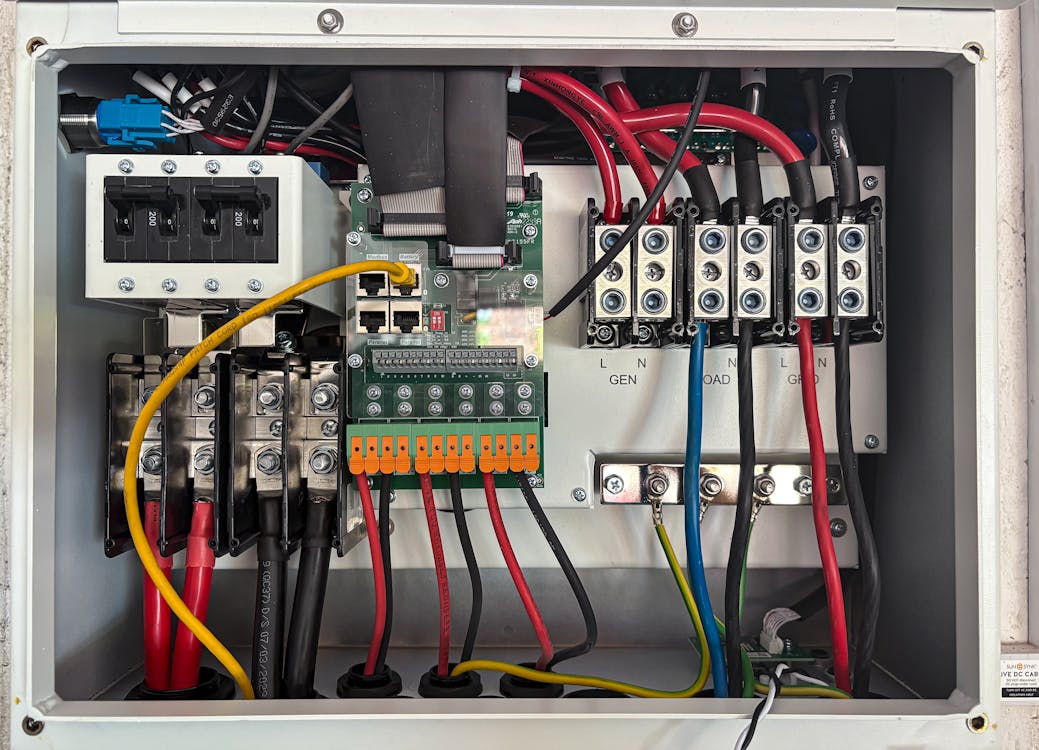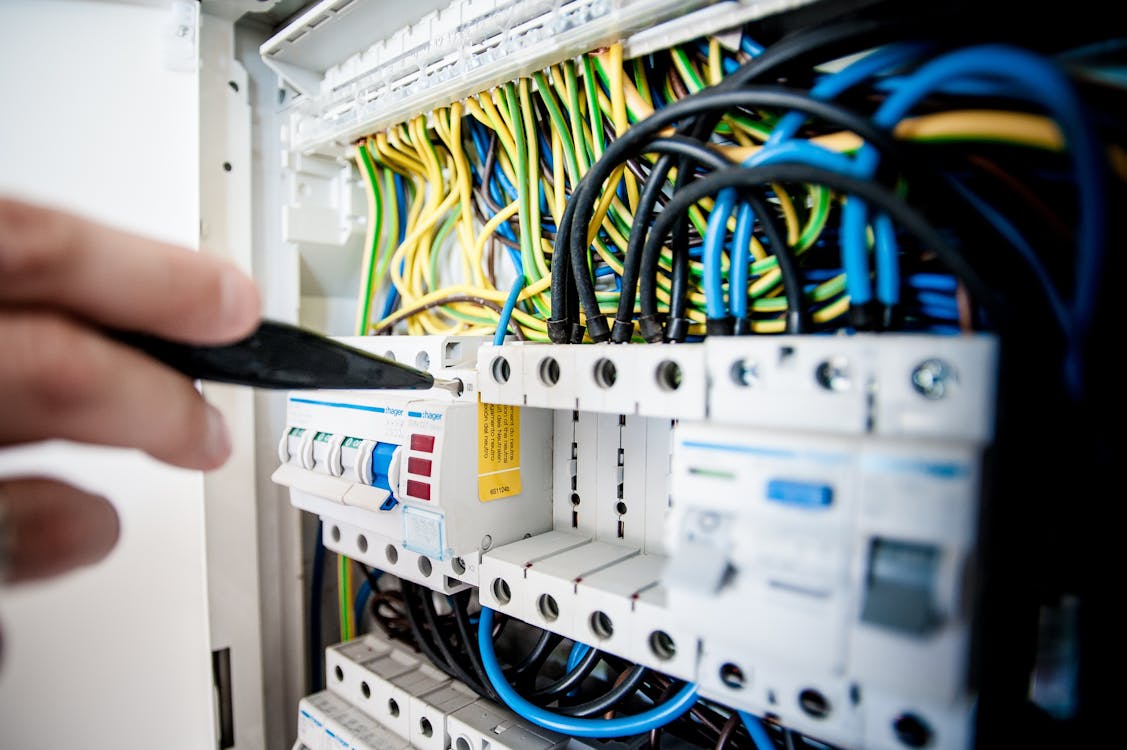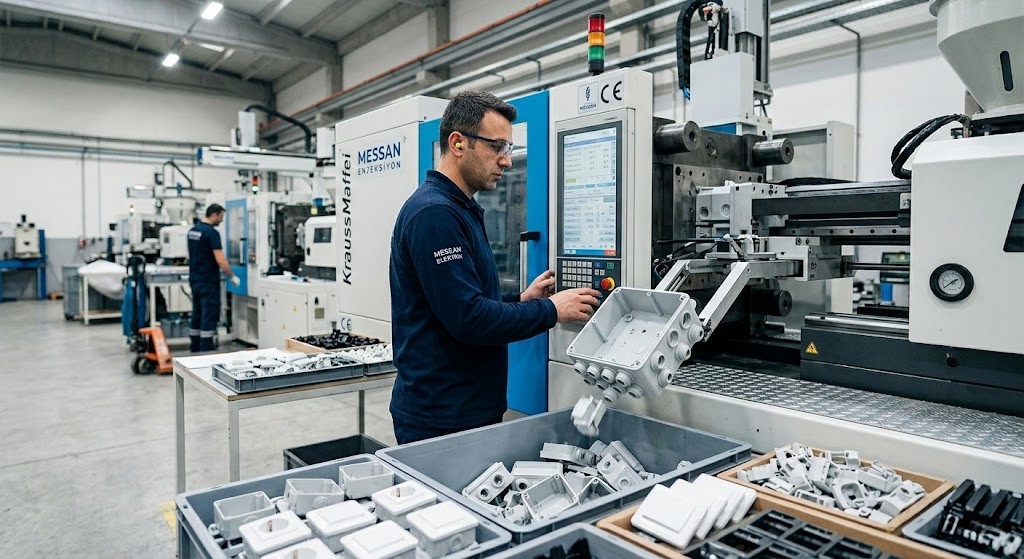
Plastic injection molding is a fundamental method in the production of critical components such as plugs, sockets, switches, fuse boxes and panel accessories in the electrical industry. This technology forms the backbone of the sector with its capacity to produce high volumes at standard quality.
What is Plastic Injection?
Plastic injection molding is the process of melting granular raw material at high temperature and injecting it under pressure into a mold cavity. The material cools inside the mold and takes on the desired form. This method enables mass production of parts with complex geometries.
Applications in Electrical Materials
The main electrical materials produced by plastic injection method include:
- Plug and Socket Bodies: Produced from insulating, high impact resistance polycarbonate or ABS materials.
- Switch Mechanisms: Switch bodies and buttons produced with precise tolerances.
- Fuse Boxes and Circuit Breaker Boxes: Safety-critical parts produced from flame retardant materials.
- Panel Accessories: Cable channels, junction box covers, mounting rails and connectors.
- Terminals and Connectors: Precision production for electrical connection elements.
Production Process
Electrical materials production with plastic injection consists of several basic stages:
- Mold Design: 3D mold design is done with CAD/CAM software.
- Mold Manufacturing: Steel or aluminum mold is machined on CNC machines.
- Raw Material Preparation: Granular plastic material goes through the drying process.
- Injection: Melted plastic is injected into the mold at high pressure.
- Cooling and Ejection: The part cools inside the mold and is automatically ejected.
- Quality Control: Dimensional measurement, visual inspection and electrical tests are applied.
Advantages of Plastic Injection
The main advantages this production method provides to the industry:
- High Production Speed: Multiple parts can be produced per minute.
- Repeatable Quality: Every part is produced to the same standards.
- Low Unit Cost: Unit cost drops significantly at high volumes.
- Design Flexibility: Complex geometries can be produced as a single piece.
- Minimum Waste: Runner and channel materials can be recycled.
Quality Standards
Plastic injection production in electrical materials is subject to strict standards. Compliance with TSE, CE and IEC standards is mandatory for product safety. Flame retardant properties are tested according to the UL94 standard. At Azenoğlu Electric, we ensure full compliance with these standards in all our production processes.